
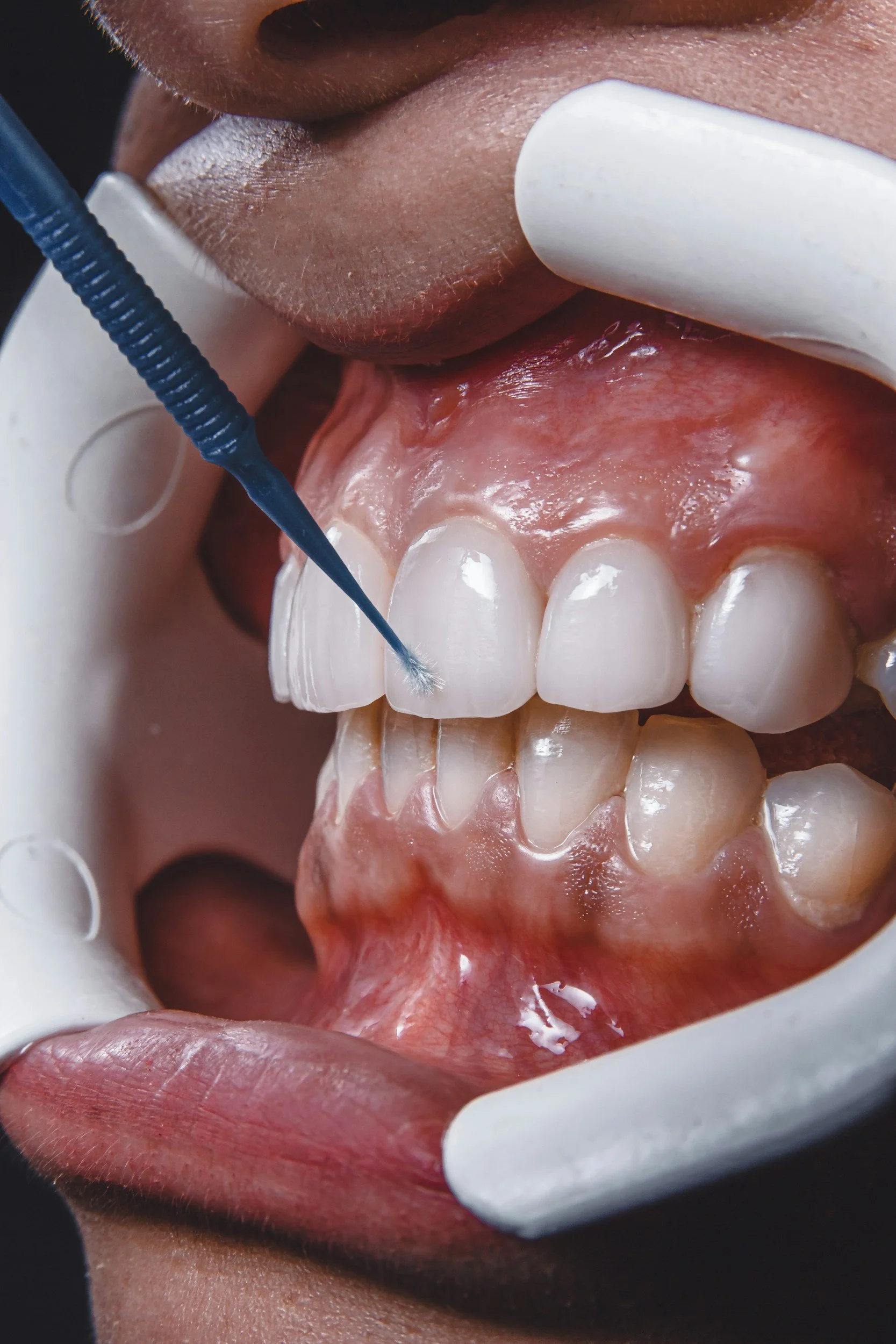
Veneers come up in a lot of smile makeover conversations, and for good reason. They can fix chips, gaps, discoloration, and uneven shapes all at once, which is more than most single treatments can promise. But they're also a bigger investment than whitening or a simple bonding fix, so it's worth understanding what veneers actually do before deciding if they're right for you.
What Veneers Actually Are
A veneer is a thin shell, usually made of porcelain, that's bonded to the front surface of a tooth. Think of it less like a cap and more like a very precise, custom-made cover that changes the color, shape, size, or length of a tooth without touching the whole structure underneath.
Porcelain is the material most dentists recommend for durability and a natural look. It reflects light similarly to real enamel, which is part of why well-made veneers are hard to spot. There are also composite resin veneers, which are more affordable but generally don't last as long and are more prone to staining over time.
What Veneers Can Fix
Veneers are a strong option for:
Teeth that are permanently stained or discolored in a way whitening can't fully correct
Chips or minor cracks
Gaps between teeth
Teeth that are slightly misshapen or uneven in size
Worn-down edges from years of grinding or normal wear
They're not a substitute for orthodontic treatment if teeth are significantly misaligned, and they're not typically recommended for teeth with active decay or gum disease that hasn't been treated first. A consultation is the best way to find out whether your specific situation is a good match.
How Long Do Veneers Last?
With good care, porcelain veneers typically last somewhere between ten and fifteen years, sometimes longer. That lifespan depends a lot on habits. Grinding your teeth at night, chewing ice, or using your teeth as tools (opening packages, biting nails) all shorten that timeline. A night guard is often recommended for patients who grind, since it protects the investment.
Regular dental checkups matter too. Veneers themselves don't decay, but the tooth underneath and the surrounding gum tissue still need normal care.
Is the Process Uncomfortable?
Not particularly. Getting veneers usually involves two visits. In the first, a small amount of enamel is removed from the front of the tooth to make room for the veneer, and impressions are taken. In the second, the finished veneers are checked for fit and color match, then permanently bonded into place. Most patients describe the process as straightforward, with mild sensitivity at most in the days afterward.
Are They Worth It?
That depends on what you're trying to solve. If whitening alone hasn't gotten you the result you want, or if you're dealing with chips, gaps, or shape issues rather than just color, veneers tend to deliver a more complete and permanent-feeling result. They're a bigger commitment upfront than whitening, but for the right case, many patients find the confidence boost lasts for years.
If your main concern is simply color and your teeth are otherwise healthy and well-aligned, it's worth having a conversation about whether whitening could get you most of the way there for a lot less investment. A good cosmetic dentist will tell you honestly which option fits your goals, not just upsell the more expensive one.
Curious If Veneers Are Right for You?
Lake Harbor Dental offers porcelain veneers in Boise and can walk you through whether they're the best fit for your smile goals, or whether a simpler option makes more sense.
Book a consultation online or call 208-853-4687. A quick conversation is the easiest way to find out what's actually possible for your smile.
